
The Short Answer: Benchmarking a collection litigation program means measuring your recovery results against clear targets and against what other lenders achieve on similar accounts. You track metrics like recovery rate, cost per matter, time to judgment, and compliance quality, then use those numbers to judge your own team and your outside counsel.
Financial institutions place thousands of accounts into legal recovery every year, yet many cannot say if their program is performing well. Without benchmarks, a bank or credit union is guessing. This guide walks through the metrics that matter, how to gather them, and how to compare your debt collection litigation results against a fair standard.
The goal is simple. You want reliable numbers you can trust, so you can spot weak spots and choose the right partner from the range of recovery services available.
What Benchmarking a Collection Litigation Program Means
Benchmarking is the practice of comparing your results against two things: your own goals and the results other creditors get on similar debt. For a lender, that means looking past a single recovery number and studying the full path an account takes through the courts.
A debt collection lawsuit moves through stages, and each stage produces data you can measure:
- Placement to filing. How long it takes to review an account and file suit in state court.
- Filing to judgment. How often a suit reaches a default judgment or a contested ruling, and how long that takes.
- Judgment to recovery. How much money comes back through wage garnishment, bank levy, or a payment plan after a court order.
When you track each stage, you can see where accounts stall and where dollars leak out. That is the point of benchmarking. It turns a vague sense that things are working into numbers you can act on.
The Core Metrics to Track
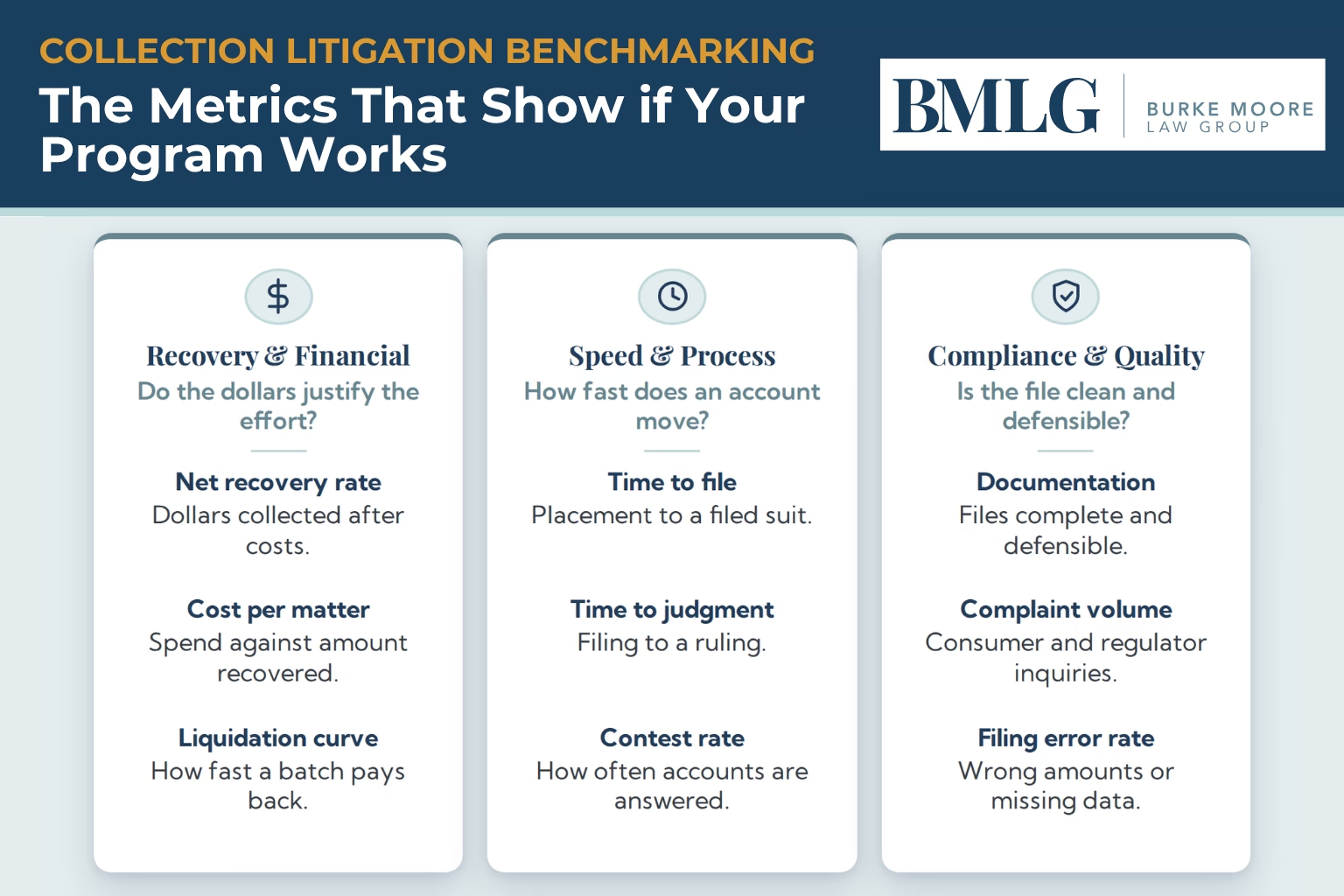
A strong program watches a small set of numbers over time. You do not need dozens of reports. You need the ones that show the litigation is working and it is worth the legal expenses.
Recovery and financial metrics
| Metric | What it tells you |
| Net recovery rate | Dollars collected as a share of the balance placed, after costs |
| Cost per matter | Legal expenses and court costs against the amount recovered |
| Liquidation curve | How soon a batch of accounts pays back over 6, 12, and 24 months |
| Judgment rate | Share of filed suits that reach a judgment or court order |
Speed and process metrics
- Time to file. Days from placement to a filed debt collection lawsuit.
- Time to judgment. Days from filing to a default judgment or ruling.
- Contest rate. Share of debt cases where the consumer answers or files counterclaims.
Compliance and quality metrics
- Documentation completeness. Whether each file has the original contract, payment history, and proof of the remaining balance.
- Complaint volume. Number of consumer complaints or regulator inquiries per thousand accounts.
- Error rate. Filings with an incorrect debt amount, inaccurate data, or missing validation information.
Compliance metrics protect you as much as recovery metrics grow your return. A program that recovers well but produces inaccurate credit reporting or deceptive affidavits is a liability.
Setting a Fair Benchmark
A number means little on its own. A 30 percent recovery rate could be excellent or poor depending on the accounts. Fair benchmarking adjusts for what you are actually collecting.
Compare accounts that share the same traits:
- Debt type. Home equity lines of credit, credit card debt, medical debt, auto deficiency balances, and SBA loan deficiencies liquidate at different rates.
- Account age. Fresh charge-offs recover better than older placements, and you must screen for time-barred debt and the statute of limitations before filing.
- Jurisdiction. Court speed and rules vary widely by state, so a single national average can mislead.
Once you group like accounts together, you can compare your results against your own history and against what a capable partner should deliver on that same mix. That is a benchmark you can defend.
Where Compliance Fits Into the Numbers

Recovery numbers do not stand alone. Every filing sits under federal law, chiefly the Fair Debt Collection Practices Act and Regulation F, plus state rules. A program that ignores this creates risk that erases its gains.
Track these compliance points as part of your benchmark:
- Validation and notice. Confirm each account met validation information rules before suit, and that any required notice went out correctly, sometimes by certified mail with return receipt.
- Data accuracy. Watch for incorrect debt amounts and inaccurate data that can lead to unlawful judgments and complaints from affected consumers.
- Documentation requirements. Keep the original contract, assignment records for any debt buyer purchase, and a clear chain showing the debt information is correct.
The Consumer Financial Protection Bureau publishes guidance on these duties in its debt collection resources, and you can review how the federal courts operate through U.S. Courts. Building these checks into your reporting keeps the program clean while it collects. A recovery partner should also be able to show its own compliance approach in writing.
Using Benchmarks to Evaluate Outside Counsel
The best use of benchmarking is judging your recovery partner. Many financial institutions are unhappy with the reporting they get from outside counsel. Firm-by-firm numbers fix that.
Ask any law firm handling your collection litigation for the same metrics, in writing, on a regular schedule:
- Net recovery rate and cost per matter, broken out by debt type and account age.
- Time to file and time to judgment across the states where you place volume.
- Contest and counterclaim rates, so you know how often accounts turn into active litigation.
- Compliance results, including complaint volume and error rate.
A firm that handles both the pre-legal and legal side under one roof can report on the whole account life. Burke Moore Law Group works across that full path, from early recovery through claims recovery, foreclosure, and bankruptcy matters, which gives you one clear source of truth for the numbers.
When accounts turn into contested cases, the same partner should carry a litigation and defense capability, since more consumers now file counterclaims. It also helps to know the firm and the attorneys standing behind the numbers you review.
Centralized reporting for large portfolios
Benchmarking breaks down when the data is scattered. If one report covers filings, another covers payments, and a third covers complaints, no one can see the full picture. Lenders that manage large portfolios get more value when a single partner rolls every metric into one consistent report on a set schedule. That centralized view lets you compare states, debt types, and time periods side by side, and it makes board-level and audit reporting far easier to prepare.
How to Start Benchmarking Your Program
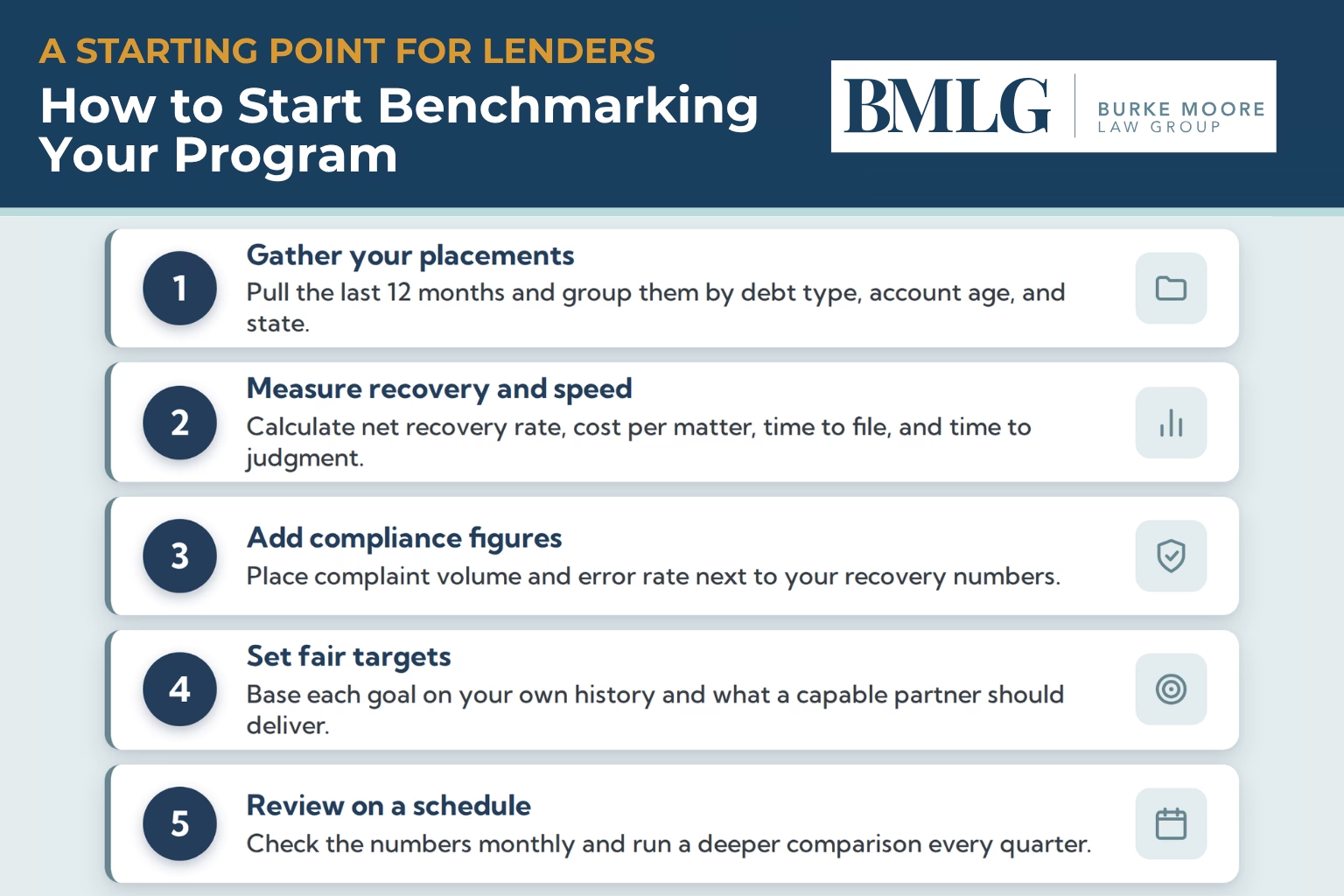
You do not need a large data team to begin. A first pass can start with the accounts you placed over the last year and the reports your outside counsel already sends. From there, build the habit of measuring the same things every month.
- Pull your placements from the last 12 months and group them by debt type, account age, and state.
- For each group, calculate net recovery rate, cost per matter, time to file, and time to judgment.
- Add compliance figures next to the recovery numbers, including complaint volume and error rate.
- Set a target for each metric based on your own history and what a capable partner should deliver.
- Review the numbers every month and run a deeper comparison each quarter, since a liquidation curve needs months to develop.
Once this rhythm is in place, the benchmark does the work for you. Weak spots surface on their own, and you can raise them with your team or your law firm while there is still time to fix the trend.
Turning Metrics Into a Stronger Recovery Program
A collection litigation program you cannot measure is a program you cannot improve. Benchmarking gives financial institutions the numbers to see what is working, where accounts stall, and whether the money recovered justifies the legal expenses and risk.
Track recovery, speed, and compliance together. Group like accounts so your comparisons are fair. Hold your own team and your outside counsel to the same standard, quarter after quarter. That is how a bank or credit union turns guesswork into a program it can trust.
Burke Moore Law Group is an Atlanta-based boutique law firm with more than 30 attorneys representing banks, credit unions, hedge funds, insurance companies, and commercial businesses in bankruptcy, debt collection, foreclosure, SBA collection, and general liability and defense matters nationwide.
Contact Burke Moore Law Group to review your recovery metrics and build a debt collection litigation program backed by clear, consistent reporting.