
Why HEIs Are the Fastest-Growing Home Equity Product
Home Equity Investment products (“HEI”) are perhaps the fastest growing instrument in the residential home equity space. These innovative products compete directly with traditional Home Equity Lines of Credit (“HELOCs”) and are gaining substantial market share. The popularity of HEI instruments surged during an economic upturn that has seen U.S. borrowers accumulate an unprecedented amount of equity in their residential homes ($18 trillion as of Q2 2026). However, as the first generation of HEI instruments reaches maturity, investors are left with a dilemma: what strategies should they employ to remediate, recover, and collect the tranche of HEI facilities that fail to perform upon maturity?
What Is a Home Equity Investment (HEI)?
To develop an efficient and effective HEI collection strategy, one must first understand the unique nature of this product. In short, an HEI is a liquidity facility that allows a homeowner to extract cash from their home’s equity without incurring debt or assuming a monthly payment obligation.
How an HEI Facility Works
Generally speaking, the process works like this:
- The investor appraises the home and gives the homeowner a lump sum of cash in exchange for a share of the home’s future equity (including potential appreciation).
- The investor records a mortgage lien against the home.
- Unlike a standard HELOC, there is no stated interest rate or monthly payment.
- Instead, the consumer has no payment obligation whatsoever until the occurrence of a “trigger” event, such as:
- The sale or refinance of the home; or
- The end of the term defined in the HEI agreement (often 5, 10, or 15 years).
- Upon the occurrence of a trigger event, the consumer must repay:
- The investor’s initial lump sum cash infusion; and
- A predefined portion of the home equity or home value.
How HEI Payoff Obligations Are Calculated
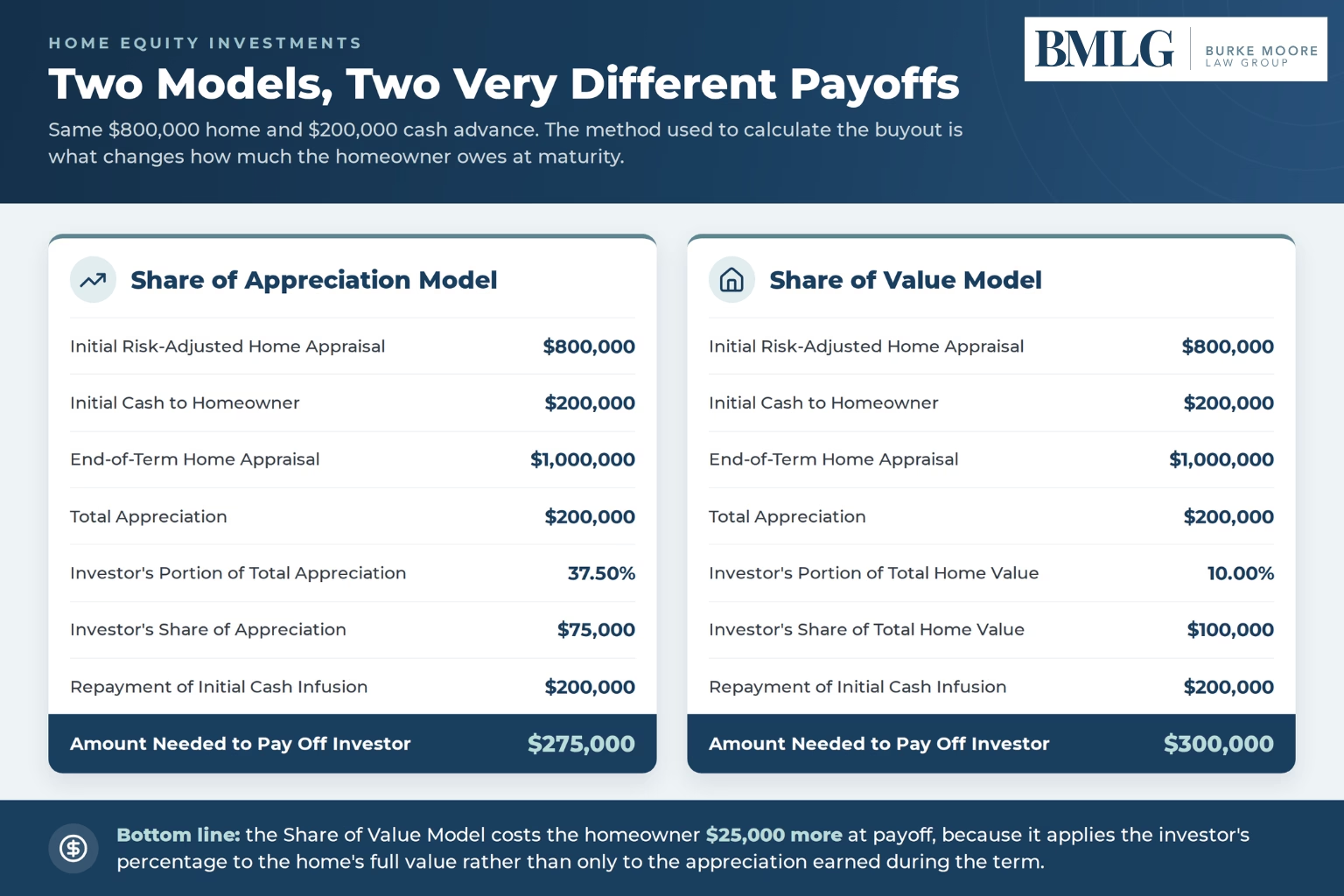
The precise calculation of this end-of-term balloon obligation can vary widely based on the terms of the particular HEI contract at issue. In general, there are two broad methods for calculating the end-of-term buyout obligation. The first method (the “Share of Appreciation Model”) requires the homeowner to repay the initial cash injection and tender a predefined portion of the home’s appreciation during the HEI term. The second method (the “Share of Value Model”) still requires the homeowner to repay the initial lump sum, but also requires them to tender an agreed percentage of the home’s total value, which necessarily includes equity appreciation that vested before the HEI contract was signed. As you may infer, the two models can produce different results, and each has its benefits and drawbacks.
Why Non-Performing HEIs Are a Problem for Investors

It is clear that HEI products give investors a flexible and creative framework that fits the needs of customers looking to better utilize their dormant equity. That said, both models leave the HEI investor with a thorny problem if the borrower does not sell, refinance, or tender the substantial balloon payment at the end of the term. Specifically, the investor is now sitting on a significant unpaid liability. Unlike traditional HELOC lenders (which are often banks and credit unions), HEI investors may not have established recovery channels that allow them to efficiently remediate these distressed HEI facilities.
How to Remediate a Distressed HEI Facility
Simply put, HEI contracts are not traditional “loans.” Nevertheless, a defaulted HEI contract is functionally equivalent to a line of credit that has been accelerated following a monthly payment default. And that gives the investor a substantial set of contractual rights and various options to enforce them.
What Happens When a Homeowner Defaults
Here’s the typical framework: assume that the terms of an HEI contract required the homeowner to tender the balloon payment to the investor at the end of a 5-year term. Imagine that the homeowner then defaults on the payment obligation. The homeowner’s failure to tender that payment is now an actionable breach of the HEI contract.
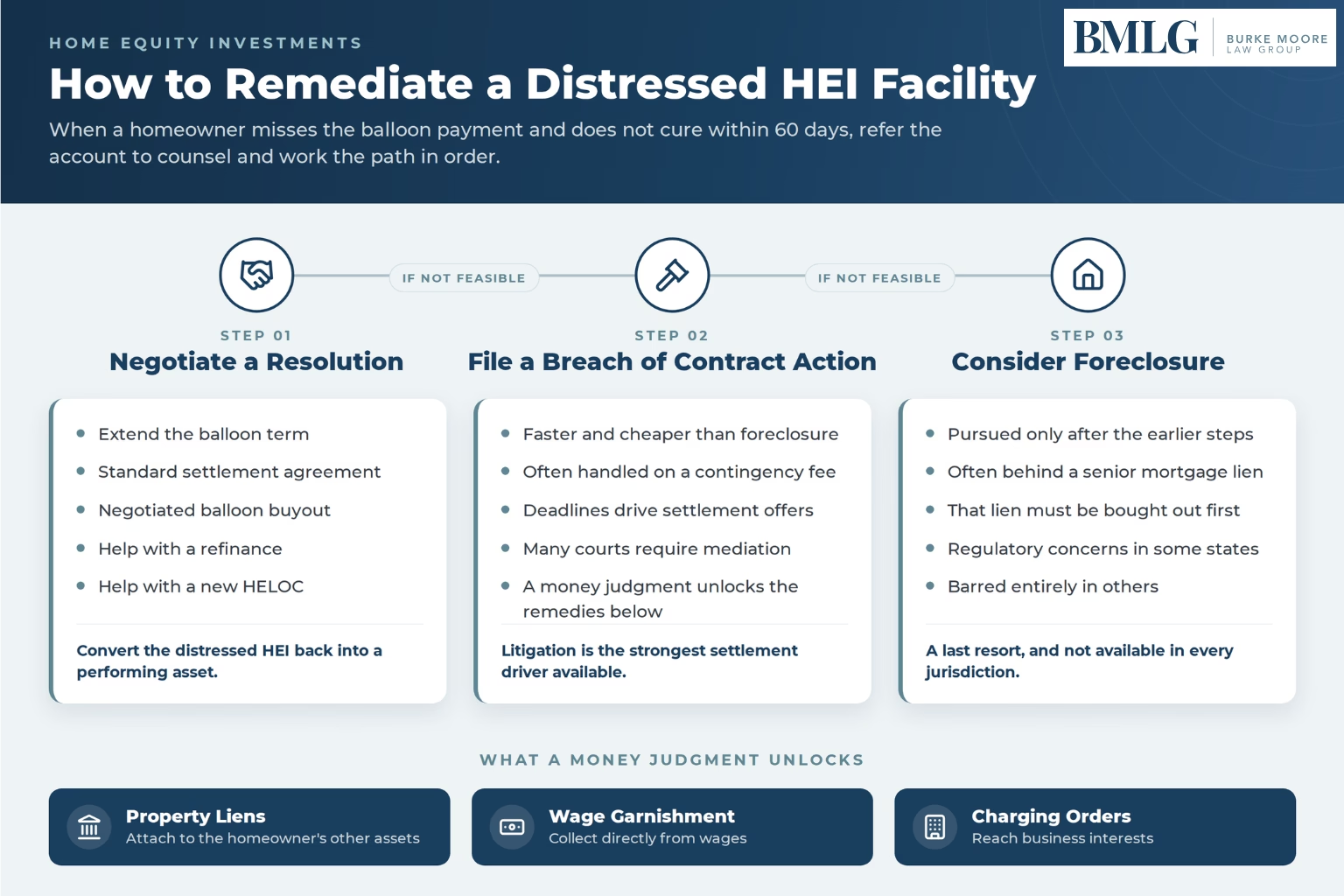
If the homeowner fails to cure that default within 60 days, the investor should commence a standard collections waterfall. However, given the heightened regulatory focus on HEI products, the investor should refer the distressed accounts directly to legal counsel to ensure compliance with the various statutory schemes. Thereafter, the following treatment path should be deployed.
Step 1: Pursue a Negotiated Resolution
First, the investor and homeowner should fully explore whether a negotiated resolution of the HEI balloon obligation is feasible. There are a number of potential tools to convert the distressed HEI product into a performing asset, including:
- Term extensions;
- Entry into a standard settlement agreement;
- Negotiated buyout of the balloon obligation;
- Assisting the homeowner with a refinance; and
- Assisting the homeowner with a HELOC.
Step 2: File a Breach of Contract Action
If that is not feasible, the investor should file a breach of contract action seeking monetary damages.
- Unlike foreclosure actions, breach of contract claims proceed quickly to judgment and can be conducted at low cost, particularly if counsel is retained on a contingency fee.
- The litigation process itself (which is replete with deadlines and obligations) is the most effective settlement driver around. Large percentages of financial settlements occur immediately after: (i) the homeowner is served with civil process; (ii) a motion for summary judgment is filed by the investor; or (iii) a judgment is entered against the homeowner.
- Additionally, many courts require mediation during the suit.
- Further, the entry of a money judgment against the homeowner allows the investor to:
- Obtain a lien against other property (including non-collateral) owned by the homeowner;
- Garnish the homeowner’s wages; and
- Obtain a charging order against the homeowner’s interest in a corporate entity.
Step 3: Consider Foreclosure
If a breach of contract action is not feasible, the investor may explore foreclosure. However, there are two caveats in play. First, the HEI investor often sits in second position behind a senior mortgage lien that must be bought out, or it will survive the foreclosure. Second, the initiation of foreclosure could implicate regulatory concerns in certain jurisdictions and may be forbidden in others.
Talk to BMLG About Your HEI Recovery Strategy
If you are an HEI investor, originator, or servicer, please contact BMLG to explore your options and develop an efficient and compliant recovery strategy on your HEI portfolio.
About the Author
Adam J. Beedenbender is a Partner at BMLG. Contact him directly at abeedenbender@burkemoore.com to discuss your HEI portfolio.
Disclaimer: this article provides general information, not legal advice. The unique facts and circumstances of an individual matter may necessitate strategic changes or lead to different outcomes. As always, legal counsel should be formally retained to address your particular matter.