
The Short Answer: When a third-party contractor damages underground utilities during excavation, the facility owner has the right to recover repair costs and related losses through a cut cable claim. The process depends on state damage prevention laws, proper documentation, and in many cases, legal representation.
Utility line strikes happen more often than most people realize. According to the Common Ground Alliance’s 2024 DIRT Report, nearly 200,000 damage incidents to buried utilities were reported in 2024 alone. For cable companies, telecommunications providers, and utility companies, recovering those costs requires understanding how the claims process works and what steps to take from the moment an incident occurs.
What Is a Cut Cable Claim?
A cut cable claim is a formal demand for compensation filed by a utility or facility owner after a third party damages an underground utility line during excavation or demolition work. The claim is typically directed at the excavating contractor, their employer, or their insurance company.
These claims fall under the broader umbrella of underground utility damage prevention, which is governed at the state level through laws like the Underground Utility Damage Prevention Act. These laws establish the duties of both excavators and facility owners before any digging begins.
Common causes of underground utility damage include:
- Failure to submit a locate request before digging
- Ignoring or misreading utility markings
- Excavating outside the designated safe zone
- Using improper equipment near a utility line
- Proceeding without a positive response from the notification center
How Underground Utility Damage Prevention Laws Work
Every state has some version of a damage prevention law, often called a “call before you dig” or 811 law. These laws require professional excavators to notify a notification center before any proposed excavation or demolition operations begin.
Here is how the process is supposed to work:
| Step | Who Is Responsible |
| Submit locate request to notification center | Excavator |
| Mark underground line locations | Facility owner or member operator |
| Confirm positive response before digging | Excavator |
| Maintain safe digging practices near markings | Excavator |
| Report damage immediately if it occurs | Excavator |
When an excavator skips any of these steps and damages a utility line, they may be liable for the full cost of repairs, service interruptions, and any civil penalty assessed under state law.
What Damages Can Be Recovered in a Cut Cable Claim?
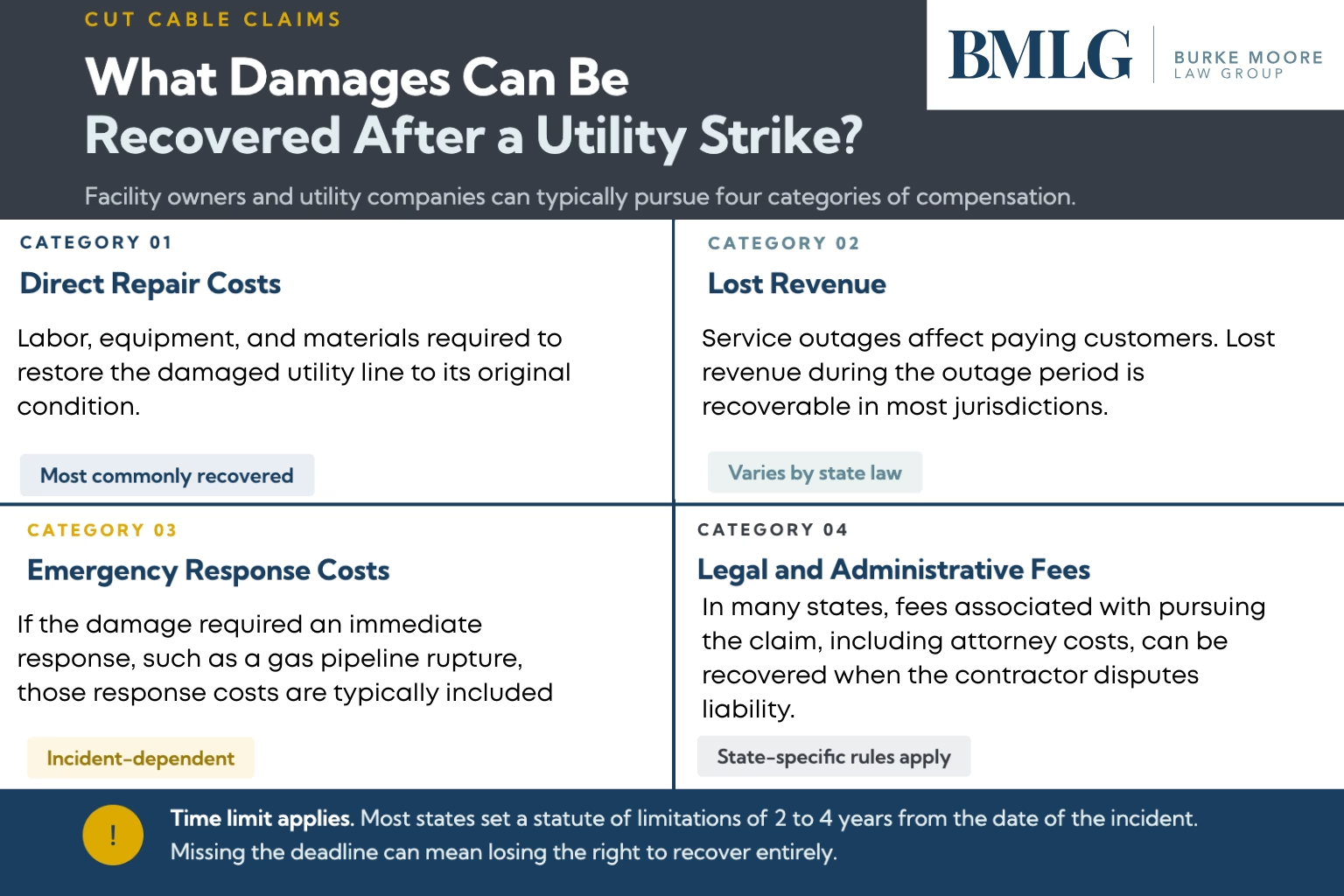
The scope of recoverable damages in an underground utility claim depends on the nature of the incident and applicable state law. Generally, facility owners can pursue:
Direct Repair Costs
This includes labor, equipment, and materials needed to restore the damaged utility line to its original condition.
Loss of Revenue
Cable companies and telecommunications providers may experience service outages affecting paying customers. Lost revenue during the outage period is recoverable in many jurisdictions.
Emergency Response Costs
If the damage required immediate action, such as response to a gas pipeline rupture or downed power cables, those costs are typically included in the claim.
Administrative and Legal Fees
In some states, a fee solicitor or legal representative can recover costs associated with pursuing the claim, particularly when the excavator disputes liability.
The Duty of Care Standard
Courts evaluate cut cable claims by looking at whether the excavating contractor met their duty of care. An ordinary person exercising reasonable caution would contact the notification center, wait for a positive response, and follow safe digging practices before breaking ground.
When a contractor skips the locate request or proceeds before utilities are marked, that deviation from standard practice is typically enough to establish liability. Extraordinary circumstances, such as an emergency repair or a situation involving imminent danger, may affect this analysis, but they are the exception rather than the rule.
Time Limits and Filing Deadlines
One of the most important things facility owners need to know is that cut cable claims have a time limit. Each state sets its own statute of limitations for property damage claims, which is typically between two and four years from the date of the incident.
Missing the filing deadline can mean losing the right to recover damages entirely. This makes it important to document damage quickly and begin the claims process without delay. If there is any question about the deadline that applies, speaking with a claims recovery attorney early in the process is a smart move.
Steps to Take After a Utility Line Is Damaged
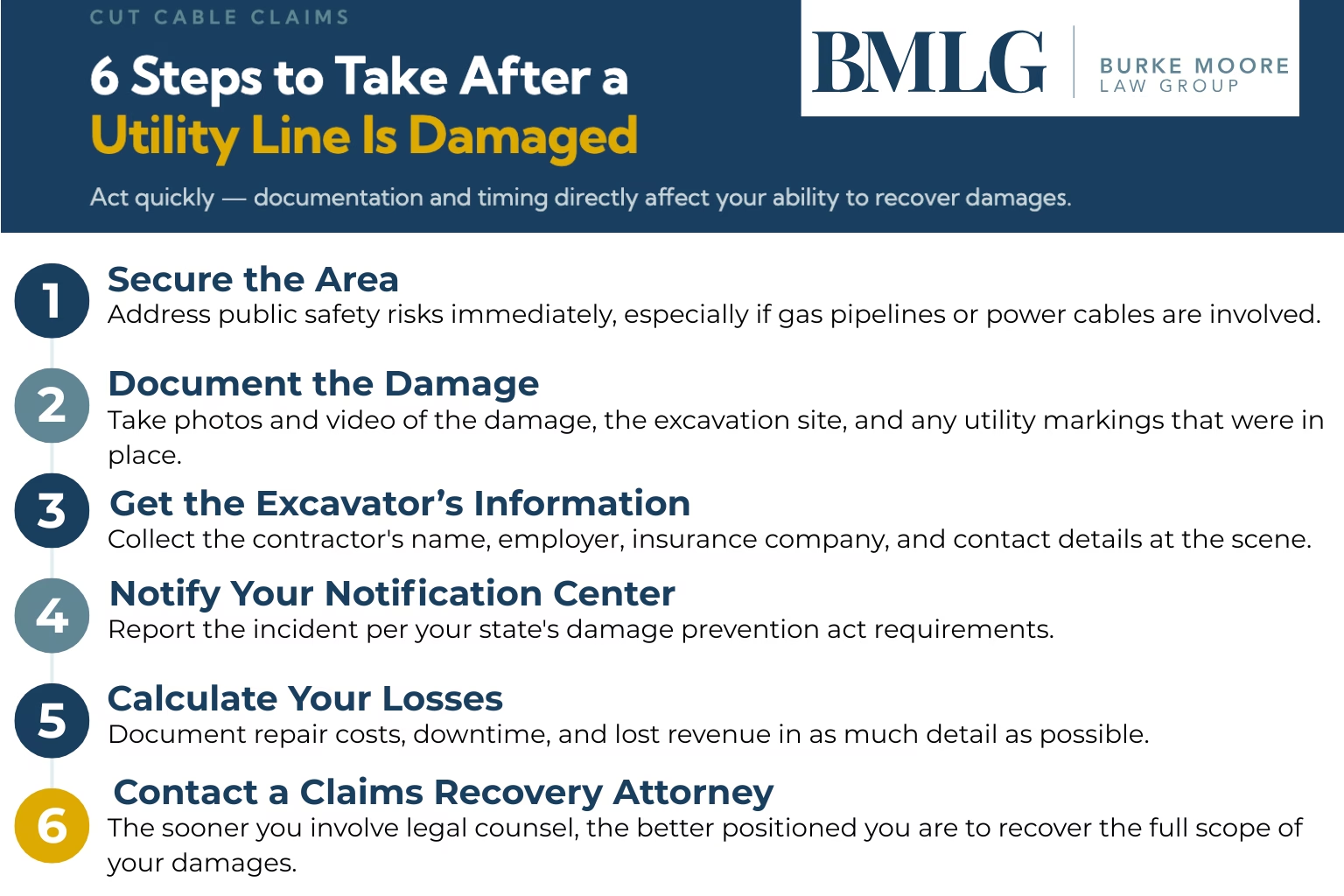
If a contractor damages your underground utility line, take these steps as soon as possible:
- Secure the area. Address any public safety risks before anything else, especially if gas pipelines or power cables are involved.
- Document the damage. Take photos and video of the damage, the excavation site, and any utility markings that were in place.
- Get the excavator’s information. Collect the contractor’s name, employer, insurance company, and contact details at the scene.
- Notify your notification center. Report the incident per your state’s damage prevention act requirements.
- Calculate your losses. Work with your internal team to document repair costs, downtime, and lost revenue with as much detail as possible.
- Contact a claims recovery attorney. The sooner you involve legal counsel, the better positioned you are to recover the full scope of your damages.
Common Challenges in Cut Cable Claims
Even when liability seems clear, recovering damages is not always straightforward. Contractors and their insurance companies often push back on claims. Here are some of the most common obstacles:
Disputed Liability
The excavator may argue that utility markings were inaccurate or that the facility owner failed to respond to a locate request within the required timeframe. Both sides of the damage prevention process matter in court.
Incomplete Documentation
Claims that lack detailed repair records, photos, or revenue loss calculations are harder to win. Documentation is what turns a cut cable incident into a recoverable claim.
Uninsured or Underinsured Contractors
Smaller excavating contractors may carry limited insurance coverage, which complicates recovery even when liability is clear. In these cases, pursuing the general contractor or the property owner may be necessary.
Multi-Party Projects
On large construction or demolition projects, multiple contractors may be on site. Determining which party is responsible for the damage requires careful investigation of the work timeline and scope.
How the Common Ground Alliance Supports Damage Prevention
The Common Ground Alliance (CGA) is a national organization focused on reducing underground utility damage through education and best practices. Their research consistently shows that proper locate requests and following safe digging practices are the most effective ways to prevent cable and utility line damage.
For facility owners and utility companies, the CGA’s resources can be useful in establishing industry standards when disputes arise. Following 811 call-before-you-dig guidelines is considered the baseline duty of care for professional excavators across the country.

When to Bring In Legal Help
Not every cut cable claim requires litigation. Many are resolved through direct negotiations with the contractor’s insurance company. When the other party disputes liability, underpays, or refuses to engage, legal representation makes a significant difference.
An attorney experienced in claims recovery can handle demand letters, negotiate settlements, and file suit when necessary. They also know the state-specific requirements under the Underground Utility Damage Prevention Act that can strengthen or weaken your position.
Protecting Your Lines Going Forward
Recovering damages after the fact is important, but prevention is a better outcome for everyone involved. Facility owners and utility companies can reduce their exposure by:
- Keeping underground facility records accurate and up to date
- Responding to locate requests promptly and within state-required timeframes
- Training staff on damage prevention act requirements
- Working with local notification centers to improve response processes
- Pursuing every valid claim to reinforce accountability among excavators in your area
- Documenting all aspects of the process, from responding to locate tickets, to preserving evidence of locates, to photographing and documenting the strike and repairs with sufficient evidence to detail the liability
When contractors face consistent consequences for failing to follow safe digging practices, the overall rate of underground utility damage goes down.
Get Help With Your Cut Cable Claim
Burke Moore Law Group represents cable companies, telecommunications providers, and utility companies in claims recovery matters nationwide. Our team handles outside plant damage claims from initial demand through litigation, giving you a single point of accountability and real-time visibility into every matter. If a third-party contractor has damaged your underground infrastructure, we can help you build and pursue the strongest possible claim.
Contact Burke Moore Law Group to discuss your situation.